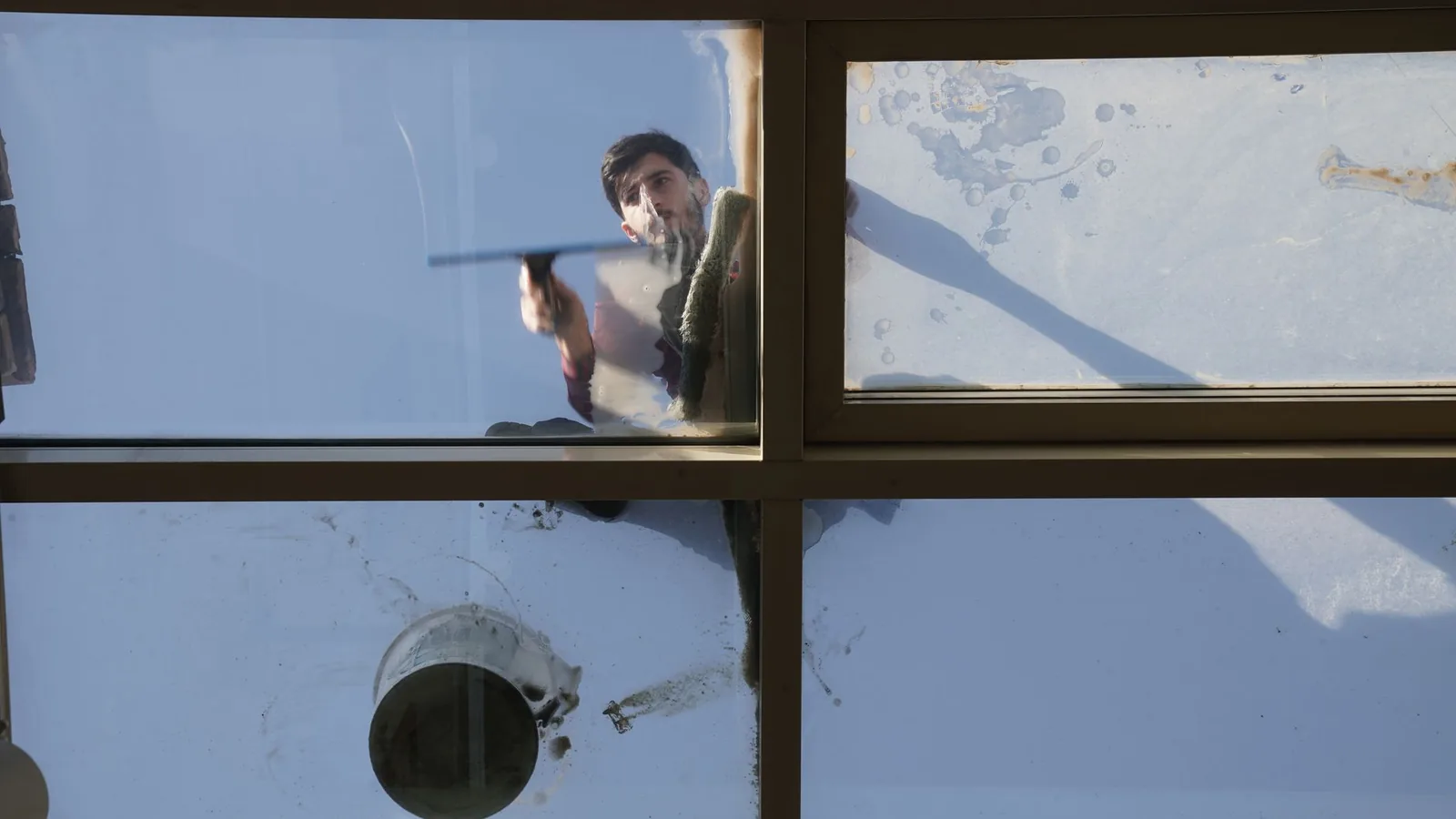
You know the exact moment. The snow finally goes, the sun comes out for real for the first time in months, you walk into the living room to enjoy it — and you can barely see out the window. Everything outside looks like it's behind a grey film.
That film has a name, and it's not just dust. It's the accumulated residue of an Upstate New York winter, and how quickly you deal with it affects more than how your house looks.
Here's why April and early May are the highest-value window cleaning window of the entire year in our region — and why spring slots book out fast.
1. Winter road salt is actively corrosive
This is the reason that matters most, and almost nobody thinks about it.
Every time a plow or a truck goes past on Route 5 & 20 or your county road, it kicks a fine aerosol of road salt — sodium chloride and calcium chloride — into the air. That spray settles on your windows and, critically, into the gaps around your window frames and seals.
Salt is hygroscopic. It pulls moisture out of the air, so even on a dry day it stays damp against your glass and your frames. Then Upstate New York does what it does best: freeze-thaw cycling. Forty degrees on Tuesday, eighteen degrees Tuesday night, back up Wednesday. Each cycle expands and contracts that salty moisture sitting in your window seals.
Over years, this contributes to seal failure on double-pane insulated glass units. When a seal fails, the inert gas between the panes escapes and moisture gets in — that's a blown window, the permanent foggy haze between panes that no amount of cleaning fixes. The fix is a new insulated glass unit, and it isn't cheap.
Washing the salt off in spring, before it bakes through a hot summer, is basic preventative maintenance for one of the more expensive components of your house.
2. Clean glass sheds pollen — dirty glass collects it
Spring in the Finger Lakes means tree pollen, and a lot of it.
Here's the mechanic most people miss: pollen sticks to dirt, not to glass. If your windows are already coated in a tacky film of winter grime, pollen lands and bonds to it, and by mid-May you've got a yellow-green crust that turns into a full second cleaning job.
If the glass is genuinely clean and slick, most pollen simply blows off or rinses away in the first rain.
Professional cleaning with purified, deionized water amplifies this. Because the water has had its minerals stripped out, it dries without leaving any residue at all — no soap film, no mineral spotting, nothing for pollen to grab onto. The glass stays clean longer.
Timing this right means you clean once in spring instead of twice.
3. Natural light and the psychology of a long winter
Clean glass transmits noticeably more light into your home than dirty glass. A heavy layer of grime, film, and mineral spotting genuinely dims a room.
After five months of short, grey Upstate New York days, that matters more than it would somewhere sunnier. There's a reason "spring cleaning" is a cultural instinct in northern climates — the payoff on a room that suddenly floods with light after a long winter is real and immediate, and it's the cheapest interior upgrade available to you.
If you have south-facing rooms, you'll notice it the same afternoon.
4. You catch problems while there's still time to fix them
A proper window cleaning means someone goes over every window on your house at close range, inside and out. That's an inspection whether you asked for one or not.
Spring cleaning routinely surfaces:
- Failing or cracked caulk around frames — cheap to fix in May, a water intrusion problem by August
- Rotting wood sills on older homes, caught early
- Screens with tears that need repair before bug season
- Blown seals you hadn't noticed
- Wasp and hornet nests starting up in eaves and window corners, while they're still small
Every one of these is dramatically cheaper to address in April than in July.
5. Spring is also the smart move if you're selling
The Upstate New York real estate market moves in spring and early summer. If your home is going to be listed, clean windows are one of the highest return-on-effort items on the entire prep list.
They photograph better — listing photos shot through dirty glass look flat and dim, and buyers scroll past them. And during a showing, clean glass reads subconsciously as "this house has been taken care of." Dirty windows read as deferred maintenance, and buyers start wondering what else was deferred.
What about the rest of the year?
To be fair, spring isn't the only reasonable time:
- Spring (April–May): The priority clean. Removes winter salt, preps for pollen season, maximizes light. This is the one to book.
- Summer: Fine, especially for a second exterior touch-up. Work happens early morning or on overcast days, because glass drying too fast in direct sun is what causes streaks.
- Fall (September–October): A good second visit. Clears summer dust and pollen and gets you into winter with clean glass — which means less to bond with the salt.
- Winter: Interior cleaning is completely viable and often overlooked. Exterior work depends on temperature.
For most homes in our area, the answer is once a year in spring, or twice a year — spring and fall — if you're near a farm field, a gravel road, or have sprinklers hitting the glass.
Book before the calendar fills
Every window cleaning company in Ontario County fills its spring calendar, and the good slots go early. If you want your home looking sharp before Memorial Day, don't wait until the first warm Saturday when everyone else calls.
Reach out to Dan's Window Cleaning today to lock in your spring window washing in Bloomfield, Canandaigua, Victor, and the surrounding area. Get the salt off, get the light in, and go enjoy the summer.
---
---