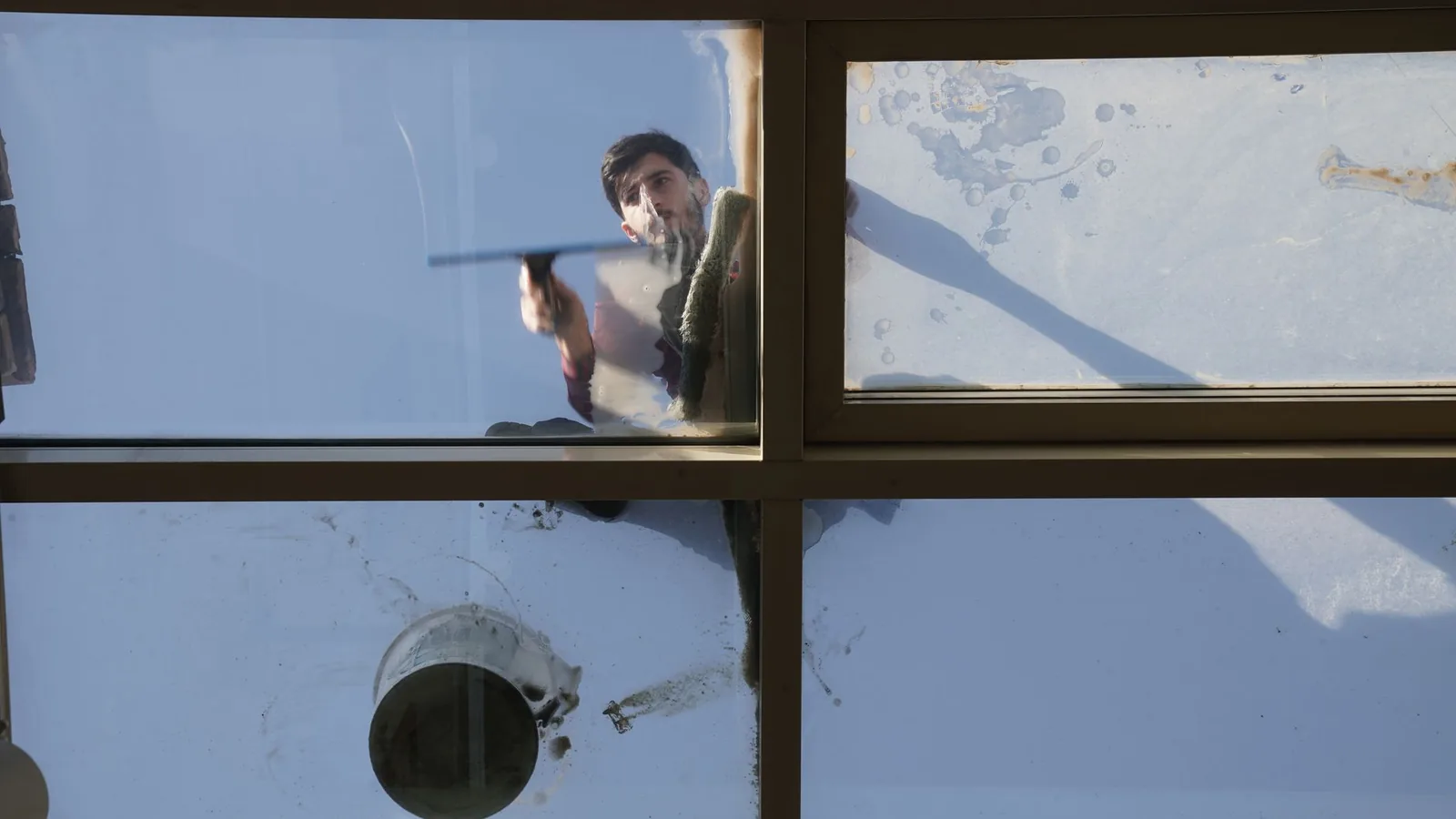
You washed the windows. You used the good glass cleaner. You scrubbed until your arm hurt. And the glass still looks cloudy, white, and streaked — like it's dirty underneath the surface.
That's not dirt. That's a hard water stain, and no amount of Windex is going to touch it.
If you have a sprinkler system that hits your windows, a hose you use to rinse the siding, or well water in your home, you've almost certainly seen it. Here's what's actually happening to your glass, how to fix it while it's still fixable, and the point at which you need to stop scrubbing and call somebody.
What hard water stains actually are
Water isn't pure. Whether it comes from a municipal supply or a well — and here in Upstate New York, a lot of it comes from limestone-heavy ground — it carries dissolved minerals: calcium, magnesium, and silica.
When water sits on your glass and evaporates in the sun, the water leaves. The minerals don't. They're left behind as a hard mineral crust bonded to the surface of the glass.
Here's the part almost nobody knows: glass is not perfectly smooth. At a microscopic level it's porous, and it's slightly alkaline. Mineral deposits sitting on it begin to react with the surface. Given enough sun, enough cycles, and enough time, those minerals stop sitting on the glass and start etching into it.
That's the timeline that matters:
- Weeks to a few months: Minerals are sitting on the surface. Fully removable.
- Several months to a year: Bonded hard, needs professional restoration. Still removable in most cases.
- Years of untreated exposure: The glass itself is etched. At this point no chemical removes it, because there's nothing left to remove — the damage is in the glass. The only fix is polishing or replacement.
This is why "I'll get to it eventually" is genuinely the wrong call with hard water. It is one of the few home maintenance issues that has a hard expiration date.
The DIY method that actually works (for fresh stains)
If the spotting is light and recent, you can often handle it yourself. The chemistry is simple: mineral deposits are alkaline, so you dissolve them with a mild acid.
What you need:
- Distilled white vinegar
- Distilled water (not tap — you'd be adding more minerals)
- A spray bottle
- A clean, non-abrasive microfiber towel
- A squeegee
- A bucket of clean rinse water
The process:
- Work in shade, never in direct sun. If your solution dries on hot glass, you've made the problem worse, not better.
- Mix 50/50 white vinegar and distilled water in the spray bottle.
- Spray generously and let it dwell for about five minutes. Do not let it dry — re-spray if it starts to.
- Scrub with the microfiber in small circles with firm, even pressure.
- Rinse thoroughly with clean water, then squeegee dry immediately.
- Inspect at an angle. Look at the glass from the side with light raking across it, not straight on. That's how you see what's really left.
If the spots lift, you're done — and you caught it in time. If the glass still looks hazy after two honest attempts, stop. Repeating a method that isn't working just wastes an afternoon.
What NOT to do
Do not use a razor blade. This is the most common way homeowners permanently destroy their own windows. Wet-scraping glass is a real professional technique, but it requires a fresh blade, the correct low angle, constant lubrication, and knowing which glass you can and can't scrape. Tempered glass — extremely common in patio doors, bathroom windows, and any pane near a floor — has surface fabrication debris that a blade will drag, leaving permanent scratches in straight lines. Once that happens, the pane gets replaced. There's no undo.
Do not use abrasive pads, steel wool, or scouring powder. You will scratch the surface, and scratched glass holds dirt worse than it did before.
Do not use straight bathroom lime remover. Many contain hydrofluoric or strong acids that will etch glass on contact, strip window tint, corrode aluminum frames, and burn skin. It's the right chemical family, badly misapplied.
Do not let the solution run onto your siding, deck, or landscaping without rinsing. Acid plus untreated aluminum, painted surfaces, or plants is a second repair bill.
When to bring in a professional
Call a pro when:
- The vinegar method failed after two attempts
- The stains have been there longer than a season
- The affected windows are on the second story
- The glass is tempered, tinted, coated, or low-E
- You can feel texture when you run a fingertip across the dry glass
Professional hard water stain removal isn't just a stronger version of vinegar. It's a graduated process: identifying the glass type first, then using controlled-strength acidic glass restorers and, where needed, cerium oxide compound with a buffing pad to polish the mineral bond off the surface without damaging the glass. Cerium oxide is the same compound used to restore optical glass. It works — but the technique, the pressure, the pad, and knowing when to stop are the whole job.
After restoration, the real win is prevention: a professional clean with purified, deionized water leaves nothing behind at all, because there are no minerals in the water to leave.
How to stop it from coming back
- Redirect your sprinkler heads. This is the single highest-impact fix and it costs nothing. Watch a full cycle and adjust any head that touches glass or siding.
- Never let a hose spray dry on the windows when washing your car or rinsing siding. Rinse and dry, or don't spray them at all.
- Get on a maintenance schedule. Windows cleaned annually never accumulate the multi-year buildup that requires restoration in the first place.
- Deal with new spotting quickly. Fresh minerals wipe off. Old minerals need equipment.
Don't wait until it's etched
If your exterior windows have gone cloudy and standard cleaning isn't cutting it, the clock is running. Dan's Window Cleaning specializes in hard water stain removal and glass restoration throughout Bloomfield and the surrounding Upstate New York area. We'll identify your glass type, tell you honestly whether it can be restored, and lift the minerals off safely — without the scratches a razor blade would leave behind.
Get in touch before "cloudy" becomes "permanent."
---
---